
Call Us :
+8618925446207
Email Us :
marketing@databeyond.com
 English
 Français
 Deutsch
 Español
 日本語
日本語 中文
中文





In the urban solid waste management chain, transfer stations have long been viewed as mere logistics hubs. However, with rising incineration fees, landfill capacity crises, and national policy support, these stations are undergoing an intelligent transformation. Leveraging AI for "Reduction" and "Resource Recovery" is now key to refined urban management and corporate profitability.
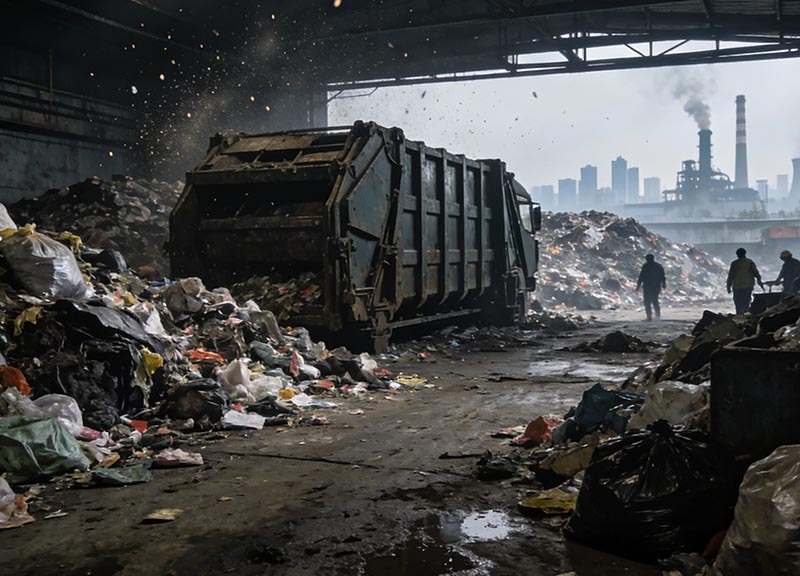
I. What are "Reduction" and "Resource Recovery" at Transfer Stations?
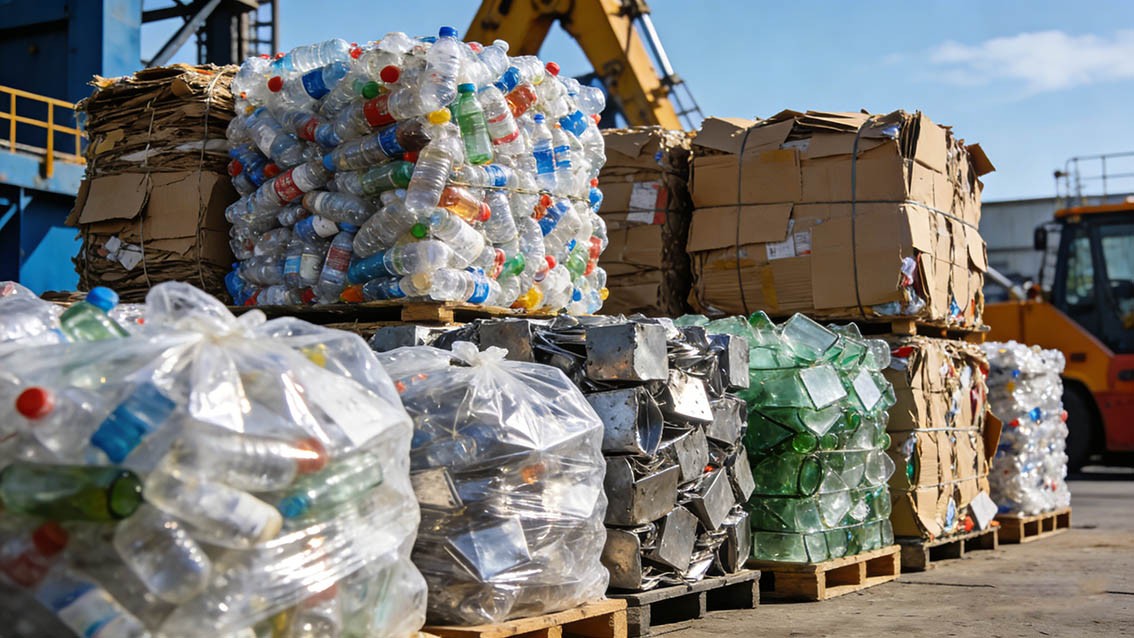
●Reduction: Extracting recyclables and non-combustibles before waste reaches final disposal (incineration or landfill) to reduce the total volume.
●Resource Recovery: An advanced goal where extracted materials are sorted into high-purity recycled raw materials (e.g., PET, PP, Paper, Metal) for sale.
II. Why Implement "Front-end Sorting"?
Front-end sorting is strategic for both incineration and landfill scenarios:
1.For Incineration: Enhancing Efficiency
●Calorific Value: Removing non-combustibles (glass, stones) improves heat value and protects the furnace.
●Emission Control: DataBeyond’s hyperspectral technology removes PVC to reduce dioxins at the source and extend equipment life.
●Value Recovery: Prevents high-value recyclables from being wasted in incineration.
2. For Landfill: Saving Capacity
●Life Extension: AI sorting can reduce inflow by 30%, extending landfill lifespan significantly.
●Compliance: Aligns with "Zero Raw Waste to Landfill" policies.
Economic Impact: Deploying smart sorting lines can reduce terminal transport and disposal costs by 35% - 50%, while generating revenue from material sales.
III. Technical Innovation: The Key to MSW Resource Recovery
DataBeyond builds a complete resource recovery chain using automated and intelligent technologies:
1.Screening: Waste is sorted by size into large, medium, and small streams.
2.AI Extraction: AI optical sorters capture high-value materials (Plastics, Metals).
3.Hyperspectral Sorting: AI hyperspectral sorters extract PP, PE, and PET films while strictly rejecting PVC to prevent chlorine pollution.
4.Final Processing: Dry materials are made into RDF/SRF; wet waste is processed via anaerobic digestion or used as fuel after dehydration.
IV. Why Choose DataBeyond?

●Proven Track Record: Founded in 2018, 300+ patents, and thousands of AI optical sorters deployed globally (China, Japan, Italy, SE Asia, etc.).
●One-Stop Solutions: Comprehensive solutions for MSW, C&D waste, RDF, Film, Textile, and Paper.
●Advanced Perception: Multi-sensor fusion handles complex and contaminated mixed waste.
●Digital Management: Plant-wide systems provide real-time data tracking for material composition and equipment status.
V. Driving the Future of Circular Economy
DataBeyond continues to drive technical innovation to increase resource recovery rates and lead the global application of intelligent sorting for a sustainable future.
 IPv6 network supported
Leave A Message
Scan to Wechat :

Scan to WhatsApp :