
Call Us :
+8618925446207
Email Us :
marketing@databeyond.com
 English
 Français
 Deutsch
 Español
 日本語
日本語 中文
中文




I. Policy-Driven Transformation: The 2026 Landfill Ban Catalyzes Industry Shifts
In South Korea, the comprehensive implementation of the "Direct Landfill Ban on Municipal Solid Waste (MSW)" starting in 2026 is forcing traditional waste management models to a crossroads. Facing soaring incineration gate fees and increasingly stringent environmental mandates, local governments and operators are prioritizing a critical challenge: maximizing waste reduction before it reaches the incinerator.
Aligning with South Korea’s "Government Oversight + Professional Operation" market model, DataBeyond has introduced a practical, closed-loop reduction solution. This system has already delivered impressive results at our project site in Chungju, South Korea.
II. The Business Logic of Sorting Center Retrofitting: Driving Fiscal Savings
The core logic of this model is highly pragmatic: the government sets reduction targets, and professional environmental enterprises execute them. Waste reduction directly translates into fiscal savings—by stripping out low-value recyclables and moisture before the waste is sent for incineration, gate fees can be slashed by 35% to 50%.
The optimal setting for this reduction is at recyclables sorting centers. As long as the facility has a footprint of at least 100 square meters and a height of 8 meters, it can undergo intelligent retrofitting. This perfectly addresses South Korea’s pain points regarding land scarcity and the lengthy construction cycles of large-scale facilities.
III. Chungju Project Site: Tackling MSW Tailings with FASTSORT-AI-SPEC Technology
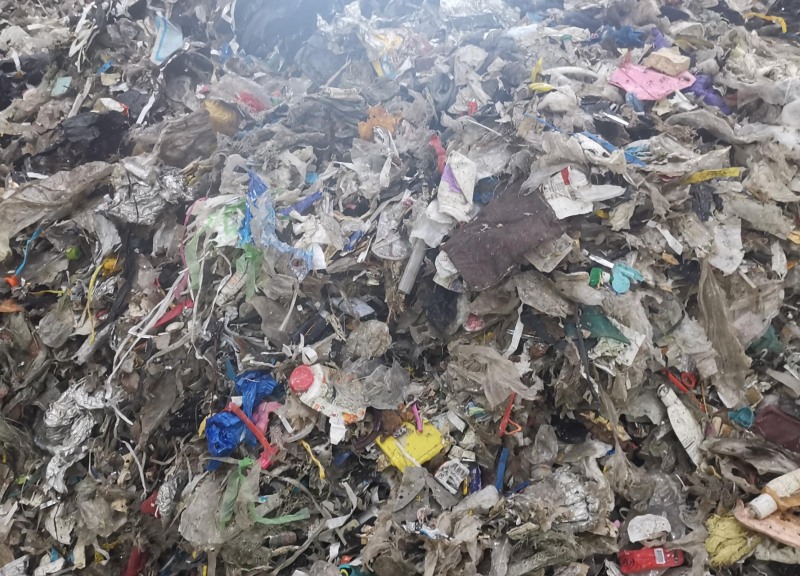
At the Chungju project site, we were confronted with extremely challenging mixed waste tailings.
Approximately 20 tons of material are delivered daily to this 10,000-square-meter facility. The composition is highly complex: roughly 20% plastic films, 60% mixed rigid plastics, and 20% various impurities such as wood, paper, sponges, and textiles. Under such conditions, traditional manual sorting is not only inefficient and costly but also fails to achieve stable, thorough separation.
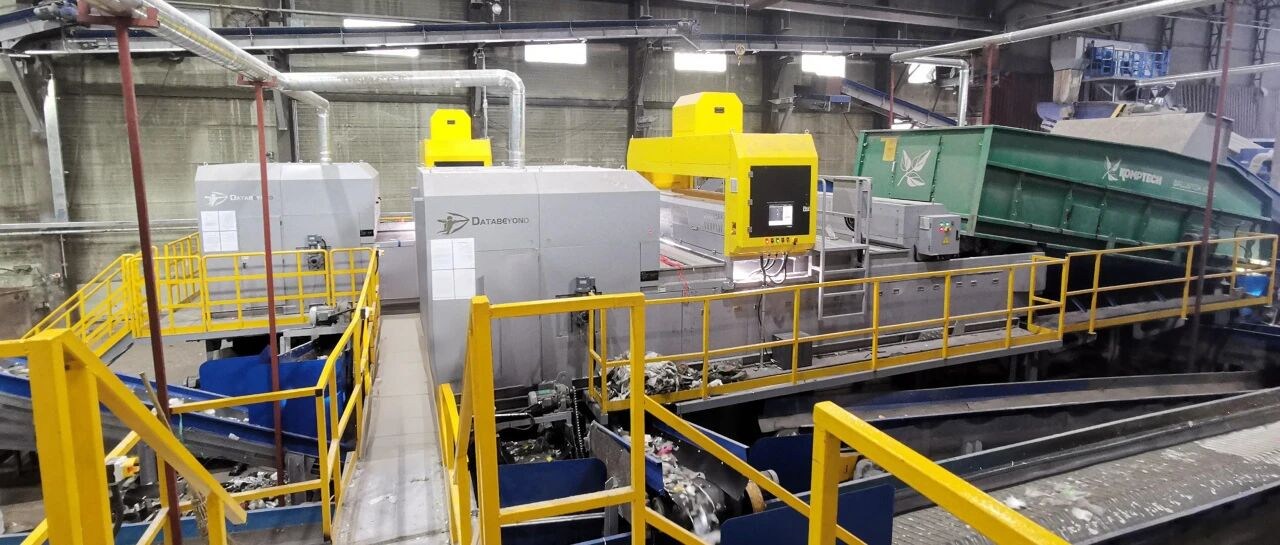
To solve this, the site deployed the DataBeyond FASTSORT-AI-SPEC Hyperspectral Optical Sorting System, enabling a continuous process from waste reduction to resource purification through automation and intelligent recognition.
During the sorting process, the system utilizes 256-band hyperspectral imaging technology to scan high-speed material streams in real-time. It prioritizes the removal of bulky contaminants such as wood, paper, ton bags, and sponges, quickly reducing the volume and increasing the purity of the stream. This step significantly lowers the pressure on downstream processing and creates stable conditions for subsequent resource recovery.
Next, the system identifies the material composition of the mixed plastics. Using AI recognition models, it efficiently extracts colored and transparent plastics (excluding black materials). Even if these plastics are contaminated, flattened, or folded, DataBeyond’s AI can accurately identify and separate them based on material properties.
Ultimately, the non-recyclable black residue is sent for incineration, while high-purity plastics such as PP and PE are collected and converted into marketable recycled raw materials. Mixed waste tailings, which previously incurred high disposal costs, are thus transformed into valuable resources.
This case exemplifies DataBeyond’s technical logic in MSW treatment: using automated, intelligent, and digital system designs to transform high-cost, low-value waste into scalable recyclable resources. By integrating front-end reduction, mid-stream purification, and end-of-life resource utilization, we have built a robust "Reduction – Purification – Resource Recovery" circular system.
IV. Digital Closed-Loop: Transparent Management and Win-Win Resource Recovery
For the South Korean government and operating enterprises, the DataBeyond solution does more than just solve operational hurdles; it provides a digital platform that records the weight, purity, and reduction ratio of each category in real-time. This offers an objective basis for government fee audits and corporate ESG reporting.
From the bustling streets of Seoul to various autonomous provinces, MSW reduction is no longer an elective—it is a mandatory requirement. Through solid, transparent technical solutions, DataBeyond is assisting South Korean partners in turning fiscal burdens into green assets, achieving a true win-win for both resource recovery and waste reduction.
 IPv6 network supported
Leave A Message
Scan to Wechat :

Scan to WhatsApp :