
Call Us :
+8618925446207
Email Us :
marketing@databeyond.com
 English
 Français
 Deutsch
 Español
 日本語
日本語 中文
中文




Introduction: Why Sorting Alone Doesn't Solve the Problem
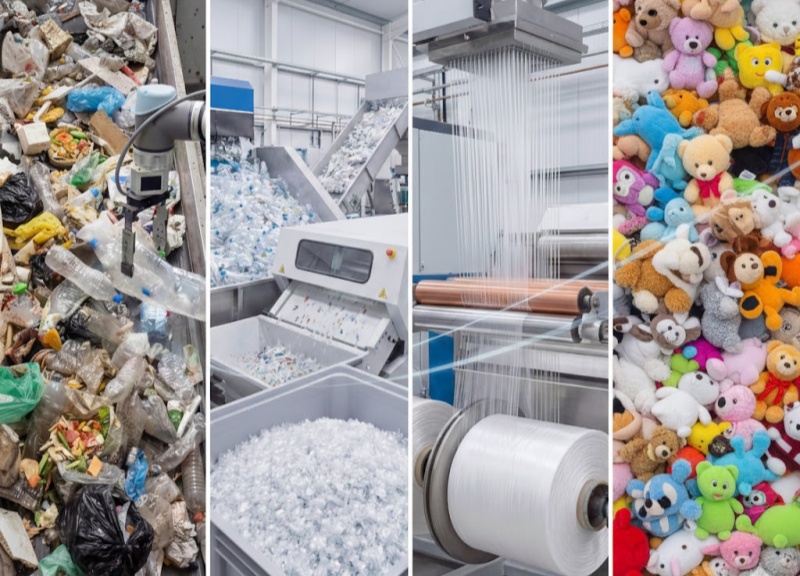
In most people's minds, the end of waste management is simply "sorting." As long as we drop plastic bottles and old clothes into different bins, the mission of environmental protection seems complete.
However, the reality is far more challenging. Sorting without a subsequent utilization system only turns "mixed waste" into "categorized piles of waste." If the output lacks purity or consistency, it remains unwanted and eventually ends up in landfills or incinerators. We must break the myth that "sorting is the end." Sorting is merely a means; the true challenge lies in ensuring that what we sort can effectively re-enter production and daily life.
The Closed-Loop Chain: Four Essential Steps for Waste to Become a Resource
To truly close the loop, waste must follow a rigorous linear path, where technology acts as both a "translator" and a "porter."
Step 1: Identification and Separation — Securing "Possibility"
The first step is to precisely extract materials of different attributes from highly mixed and diverse waste. Whether it is identifying various plastics in Mixed Municipal Solid Waste (MSW), extracting thin films buried in Construction and Demolition (C&D) waste, or removing impurities from Organic Waste, this stage transforms unusable mixtures into "single-material candidates for resource recovery."
Step 2: Purity and Stability — Earning the "Entry Ticket"
Downstream recycling plants look past environmental sentiment to industrial metrics: Is the purity high enough? Is the quality stable? Taking PET bottles as an example: if colored bottles are mixed into blue-white bales, the resulting PET flakes will suffer from uneven color, yellowing, and increased impurities, directly limiting high-end applications. Only with precise color and material sorting can the feedstock meet the standards for high-quality production lines, achieving a true closed loop and avoiding downcycling.
Step 3: Upcycling — The Transformation of Identity
Clean, stable materials enter the factory for deep physical or chemical restructuring. At this stage, they shed the "waste" label and re-enter the cycle as "standard industrial raw materials":
●PET (Water Bottles): Through crushing, washing, and purification, they are transformed into food-grade rPET pellets or recycled polyester chips.
●PP (Meal Boxes, Milk Tea Cups): Processed to retain high durability, they are reshaped into high-quality recycled PP modified pellets.
●PE (Natural/White/Mixed Colors): "Natural" PE is reprocessed into film-grade pellets; "White" PE becomes pipe-grade material; and "Mixed Colors" are processed into utility-grade PE pellets.
●Films (C&D Waste): Transformed through pyrolysis technology in an oxygen-free environment and further refined.
●Textiles (High-purity old clothes): After extracting high-purity polyester, nylon, and spandex, they are reconstructed into high-spec recycled filaments or fibers via physical recycling (Solid State Polycondensation, SSP) or chemo-enzymatic methods.
●Specialty Plastics (PVC/ABS): Utilizing fine filtration, molecular chain repair, and functional toughening, their physical properties are restored to become high-performance recycled ABS/PVC pellets.
Step 4: Re-entering Life — The Ultimate Explosion of Value
This is the most exciting moment—where materials cross the boundary of "waste" and re-embed themselves into our daily lives. Former meal boxes and milk tea cups become home storage bins or municipal drainage pipes; "Natural" PE is reshaped into elegant cosmetic packaging; "White" and "Mixed" PE become building insulation, sewage pipes, or street fences and trash bins. Fibers from old clothes are re-woven into apparel and home textiles; restored ABS/PVC returns to the electronics chain as smartphone/appliance casings or precision automotive parts; and construction films are refined into non-standard diesel and gasoline to power industrial machinery. Every material finds its way home, and the loop is finally closed.
Cognitive Reconstruction: Why Technology is the "Glue" of the Closed Loop
Even with a clear path, many resources still fail to "return." The disconnect often lies in systems that focus on "whether it can be sorted" while ignoring "whether it can be used." To meet high-value downstream requirements and international standards (such as EFSA, FDA, and APR/ISRI bale specs), purity and stability are non-negotiable.
DATABEYOND bridges this gap through AI + Multi-Sensor Fusion and Embodied Intelligence, ensuring high-precision sorting even in complex, dirty, and non-standard conditions:
●FASTSORT Series: The expert in high-speed sorting for whole bottles and materials. Using ultra-high-definition color line-scan cameras and AI, it maintains 99.6%+ accuracy for plastic bottles, controlling impurities to ppm levels to meet food-grade requirements. It also effectively solves the "yellow/barrier flake" challenge in washing lines.
●FLAKESORT Series: The master of material and color purification for flakes. Equipped with a 256-band hyperspectral sensor, it identifies and sorts 2-20mm flakes by material, color, and aging level, achieving high-purity separation for PP, PE, PET, and PVC.
●FLAKESCAN Series: Designed for online quality inspection of 2-20mm flakes. It provides real-time analysis of material purity and impurity content (ppm), helping plants evaluate feedstock value and ensure downstream stability.
●PICKING AI Series: Collaborative sorting with Embodied Intelligence. With 99%+ accuracy, these robots act as the "intelligent arms" of the system, handling entangled films, fragile specialty plastics, and complex interactions that traditional machines cannot.
Giving Materials New Life, Making Circularity an Instinct
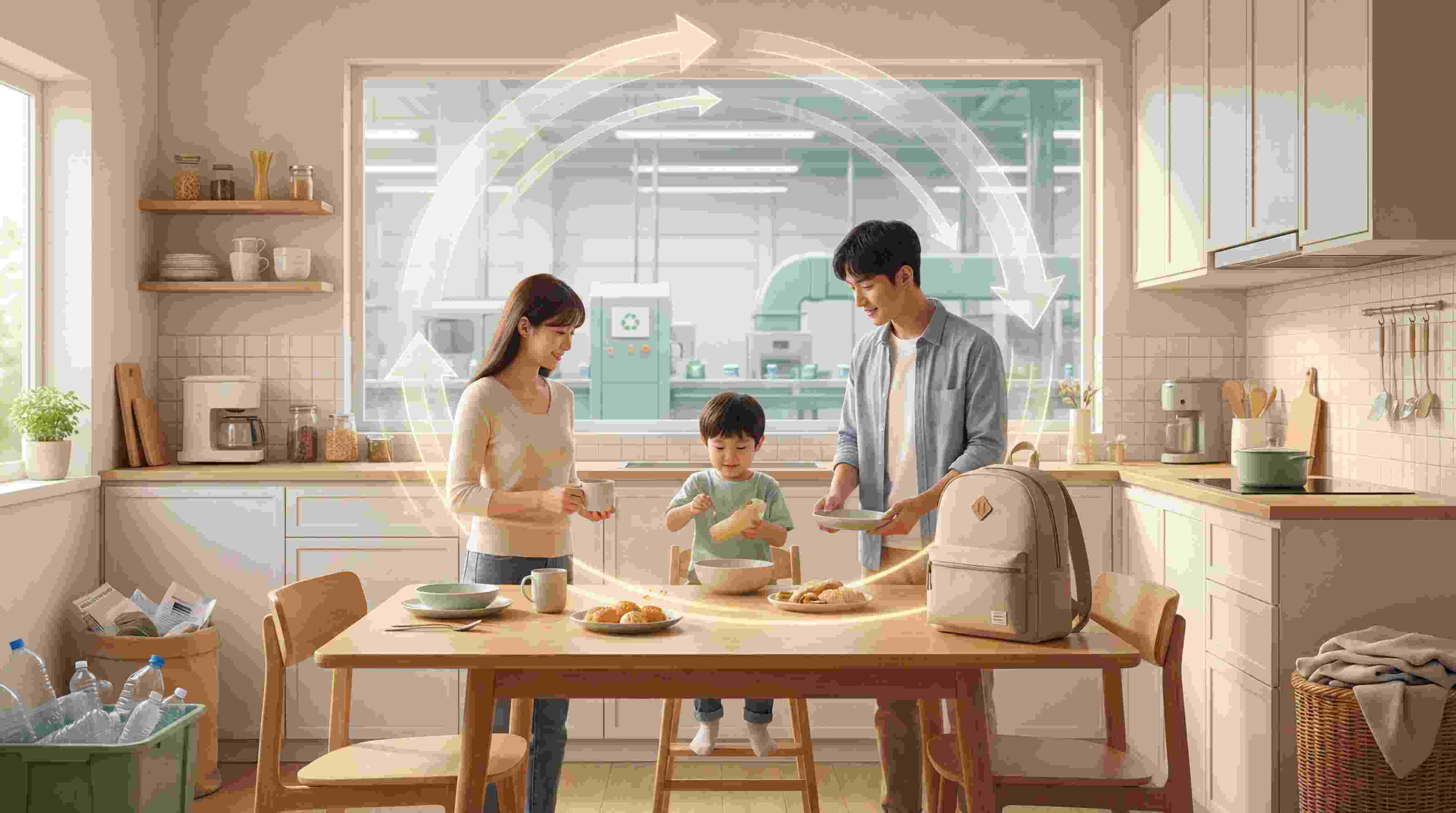
When technology solves material identification and bridges the gap to precise execution, the entire social material cycle is reshaped. We strive for a future where "circularity" is no longer a slogan, but a seamless, efficient, and intuitive industrial instinct.
What truly matters is not the complexity of our algorithms or the precision of our robots—it is where those once-discarded materials finally go. When sorting systems consistently output high-quality raw materials, and the public's sorting efforts transform back into high-quality products, technology fulfills its warmest mission.
DATABEYOND is dedicated to helping every material find its way home, giving life back to matter, and returning the circular economy to everyone’s daily life.
 IPv6 network supported
Leave A Message
Scan to Wechat :
Scan to WhatsApp :