
Call Us :
+8618925446207
Email Us :
marketing@databeyond.com
 English
 Français
 Deutsch
 Español
 日本語
日本語 中文
中文





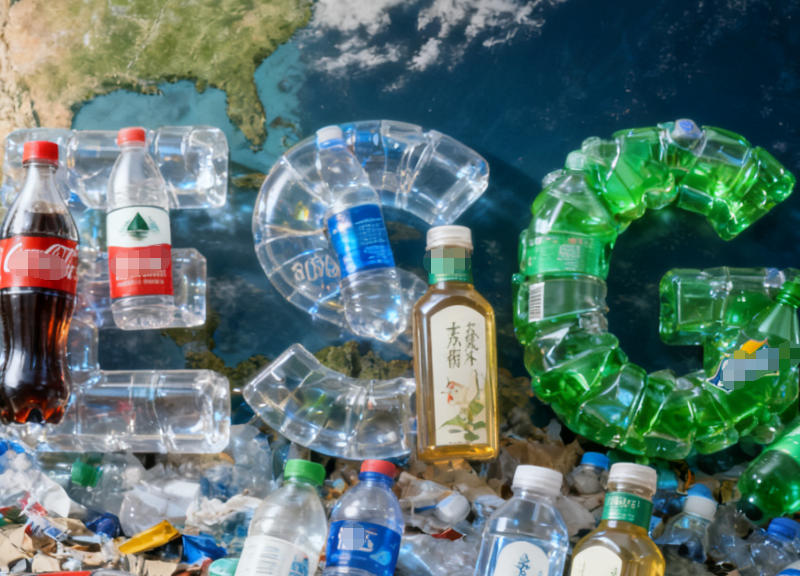
Plastic, once hailed as a "revolutionary invention," has become a cornerstone of modern economies. Its lightweight, durable, corrosion-resistant, and cost-effective properties have made it ubiquitous across industries—packaging, transportation, construction, healthcare, agriculture, and electronics. The material’s functional value is undeniable: PET bottles reduce beverage packaging energy consumption by 52% and greenhouse gas emissions by 55% compared to glass or metal alternatives; plastic aerospace components cut aircraft weight and fuel use; automotive plastic parts lower lifecycle costs by 20–30%; and plastic building insulation reduces energy consumption by 26% in temperate regions. Yet, this "great invention" has morphed into a global environmental burden due to lagging waste management and recycling systems.
The Alarming Plastic Crisis
A latest review highlights the severity of the issue: Only about 9% of global plastic is successfully recycled, with approximately 80% of plastic-related toxic substances ending up in ecosystems or landfills. Land-based waste is the primary source of marine plastic pollution—each year, 14 million tons of plastic enter oceans, a figure projected to surge to 23–37 million tons annually in 20 years. By 2050, plastic in oceans may outweigh fish if no intervention occurs. Microplastics (MPs) and nanoplastics (NPs) have spread globally, posing unforeseen ecological and health risks: they adsorb heavy metals and organic pollutants, disrupt endocrine systems, alter soil microbial communities, and enter the human food chain with unclear long-term impacts. The review emphasizes that sustainable plastic use must be evaluated through Life Cycle Assessment (LCA) and circular economy frameworks, balancing usage-phase benefits with production and waste-phase harms.
DATABEYOND’s Role in Turning the Tide
Addressing this crisis requires enhanced recycling efficiency, and DATABEYOND is at the forefront of this effort. In 2024 alone, our intelligent sorting solutions processed 200 billion plastic bottles—if lined up end-to-end (using a standard 20cm bottle length), they would circle the Earth’s equator (≈40,000 km) 1,000 times and cover over 285,700 standard football fields (≈7,000 m² each) . Beyond plastic, we deliver precise sorting for a wide range of renewable resources, including Municipal Solid Waste (MSW), construction and demolition waste, food waste, and textile waste. Each sorted bottle reduces the need for virgin plastic production, cutting carbon emissions and curbing microplastic pollution.
The plastic crisis is not insurmountable—it demands technological innovation and systemic change. DATABEYOND’s multi-scenario sorting capabilities provide a solid foundation for a circular economy, turning plastic waste from a burden back into a valuable resource.
 IPv6 network supported
Leave A Message
Scan to Wechat :

Scan to WhatsApp :