
Call Us :
+8618925446207
Email Us :
marketing@databeyond.com
 English
 Français
 Deutsch
 Español
 日本語
日本語 中文
中文





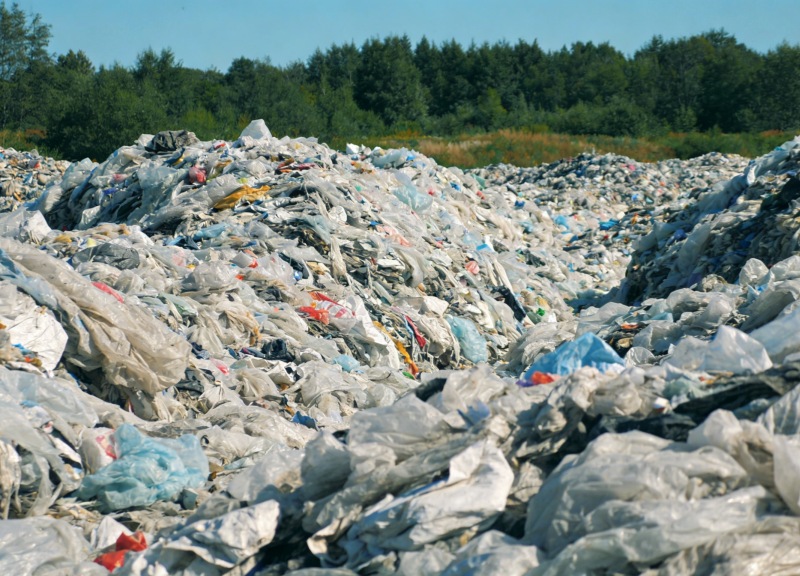
Within mixed municipal solid waste streams, lightweight plastic films are widely regarded as one of the most challenging materials to recover. Due to their high sorting difficulty, elevated processing costs, and historically low recycling value, films are often categorized as low-value recyclables. As a result, their enormous recycling potential has long been constrained by technological limitations.
The industry has been waiting for a true breakthrough—one capable of delivering high throughput, high purity, and low operating costs, and ultimately unlocking the hidden value of plastic films at scale.
Why Film Sorting Is So Difficult
The challenge is rooted in the physical nature of films themselves. Lightweight, flexible, and highly mobile, films tend to float, flutter, entangle, and accumulate during high-speed conveying. In real-world recycling streams, film materials are further complicated by mixed compositions—PE, PP, PET, PVC, and multilayer films—often contaminated with oils, inks, and printed layers. These factors make accurate identification and stable separation extremely difficult.
Conventional sorting technologies struggle under these conditions, frequently falling short in efficiency, stability, and consistency.
Two Core Capabilities Define the Breakthrough
To truly solve film sorting in complex waste streams, any effective solution must overcome two fundamental technical barriers:
1.Absolute control over film behavior
2. Ensuring films remain stable, flat, and controllable during high-speed transport—eliminating floating, backflow, and material chaos during detection and ejection.High-speed, high-precision recognition and execution
Maintaining accurate identification and reliable separation under high throughput, without sacrificing purity or operational stability.Against this backdrop, film sorting is approaching a decisive technological inflection point.
FASTSORT-FILM-AI-SPEC
Redefining Film Sorting Through System-Level Innovation
The FASTSORT-FILM-AI-SPEC Film AI Hyperspectral Optical Sorter, developed by Databeyond, is engineered specifically to lead this transition. Rather than incremental improvement, it introduces system-level innovation across three critical technological dimensions, offering the industry an entirely new approach to film sorting.
Innovative Aerodynamic Design
Stable, Flat, and High-Speed Material Conveyance
FASTSORT-FILM-AI-SPEC features a proprietary aerodynamic system designed to actively suppress internal turbulence. This enables lightweight materials—such as plastic films, foams, flexible packaging, and sponges—to be conveyed uniformly, flatly, and stably at high speed, creating ideal conditions for precise detection and sorting.
To further increase processing capacity, the system’s operating speed has been increased from 3.5 m/s to 4.2 m/s, delivering a 1.2× throughput improvement without compromising sorting accuracy.
New-Generation Capture Chamber
Optimized Flight Trajectories for Lightweight Materials
FASTSORT-FILM-AI-SPEC is equipped with a newly developed capture chamber structure that precisely controls airflow to guide sorted lightweight materials along a stable and predictable flight path. Once identified, materials are accurately directed into designated collection chutes.
This design significantly reduces floating, turbulence, backflow, and secondary mixing, ensuring clean separation and higher downstream material quality.
AI + Hyperspectral Sensor Fusion
Integrated Material-and-Color Precision Sorting
By combining AI-based visual recognition with hyperspectral sensing (SPEC), FASTSORT-FILM-AI-SPEC achieves true material-and-color integrated sorting. The system accurately identifies and separates a wide range of plastic films—including PE, PP, PET, and PVC films—even in complex, contaminated streams.
Plastic film sorting accuracy reaches approximately 95%, setting a new benchmark for high-speed, high-purity film recovery.
*The above data is provided for reference only. Actual sorting accuracy and maximum throughput may vary depending on material composition and feed conditions.
Turning a Historical Bottleneck into a Scalable Advantage
As global consumption of flexible packaging continues to surge, the recycling industry is being forced to re-evaluate the true value of plastic films. Databeyond’s high-efficiency film sorting solution transforms what was once a structural limitation into a replicable, industrial-scale advantage.
By enabling stable, precise, and economically viable film recovery, FASTSORT-FILM-AI-SPEC is accelerating the transition toward a more efficient and commercially sustainable circular economy.
 IPv6 network supported
Leave A Message
Scan to Wechat :

Scan to WhatsApp :