
Call Us :
+8618925446207
Email Us :
marketing@databeyond.com
 English
 Français
 Deutsch
 Español
 日本語
日本語 中文
中文





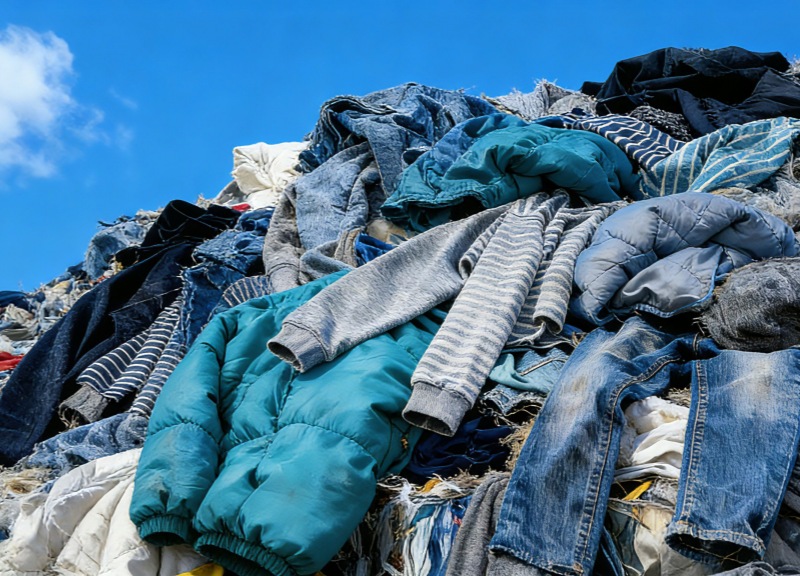
Global textile waste exceeds 92 million tons annually. China alone generates over 20 million tons, yet the comprehensive recycling rate remains below 20%. The vast majority ends up in landfills or incinerators, causing significant resource waste and environmental pollution.
High-quality "fiber-to-fiber" closed-loop regeneration is the key to a circular economy in the textile industry. However, this green path is currently blocked by a seemingly basic yet critical bottleneck: the sorting of waste textiles.
I. Material Complexity: Traditional Sorting Hits a Wall
Inefficient and disorganized traditional sorting has long hindered the upgrading of the textile recycling chain, seriously affecting the industry's transition toward intelligence and standardization.
1.Complex Blends: Modern garments are mostly blended fabrics (polyester, cotton, nylon, spandex, etc.) with diverse colors and impurities like zippers, buttons, and offset prints, making sorting extremely difficult.
2.Lagging Technology: Current methods rely heavily on manual labor, using sight and touch to judge materials. The few existing automated systems lack the precision to handle complex blends or meet the stringent purity requirements of high-end regeneration.
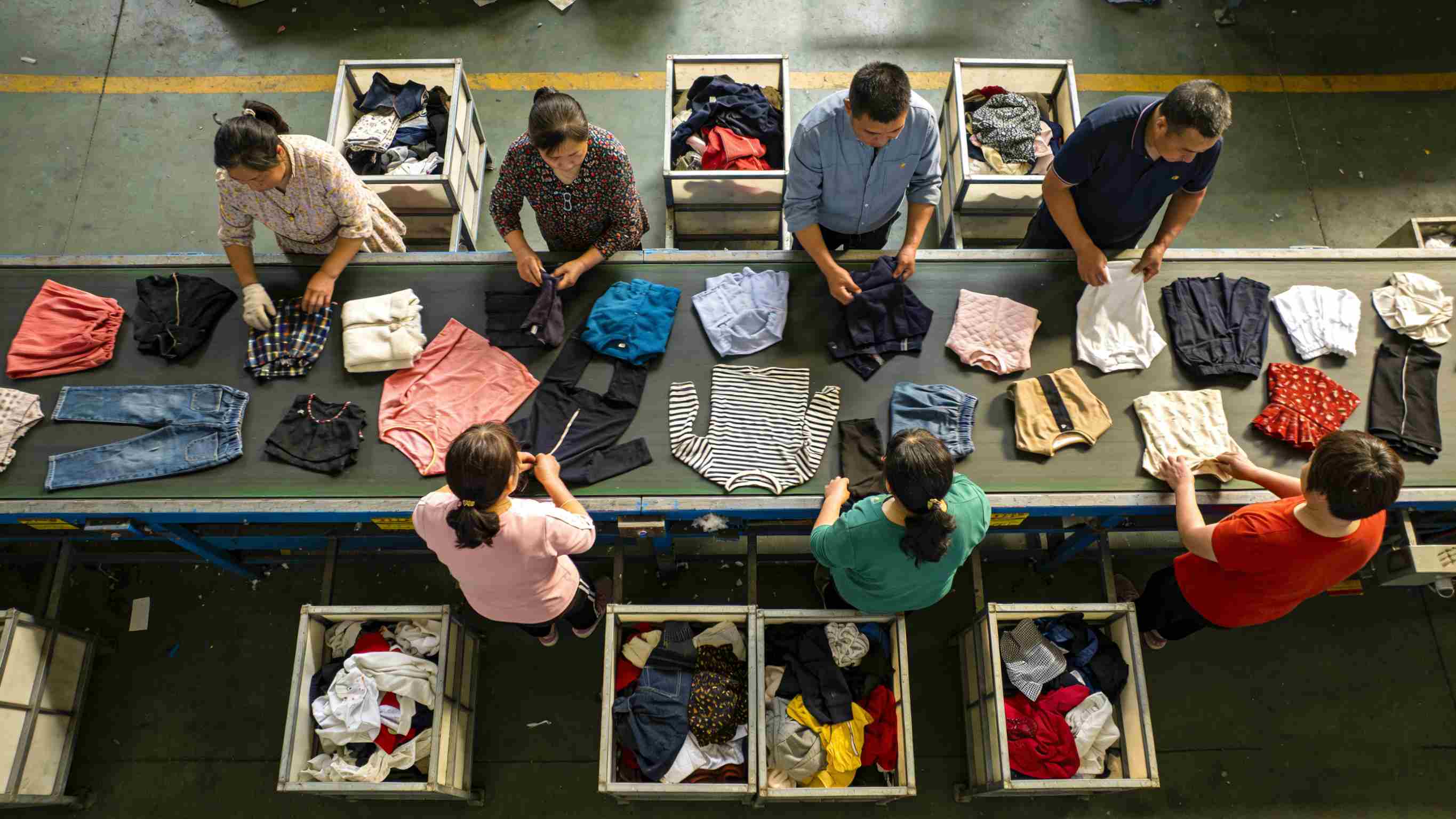
Ineffective sorting leads to unstable composition and poor performance of recycled materials. High-end downstream technologies require extreme purity (e.g., single-component content of 80%-90%). Without precise sorting, high-value recycling is impossible, and most old clothes are "downcycled" into fillers or incinerated.
II. Databeyond's Breakthrough: The Key to "Fiber-to-Fiber"
To address these pain points, Databeyond Technology has independently developed an AI Hyperspectral Optical Sorter. By combining an industry-leading AI database with 256 hyperspectral bands, it provides a practical solution for complex textile sorting.
Databeyond’s textile sorting solution demonstrates powerful multi-dimensional capabilities:
●Whole-Garment Material Sorting: Accurately identifies garments based on specific material ratios (e.g., >90% polyester, 100% cotton, >75% nylon, or specific blends of spandex, acrylic, wool, and linen).
●Style Sorting: Recognizes specific garment styles (e.g., "white long-sleeved 100% cotton shirt").
●Post-Shredding Material Purification: Shreds pre-sorted high-purity garments and uses the AI sorter to further purify materials while removing impurities like sequins, buttons, zippers, and PU coatings to ensure feedstock purity for chemical recycling.
●Industrial Offcut Sorting: Precisely sorts factory scraps by material composition and color, providing high-purity feedstock for subsequent reuse.
Databeyond's intelligent sorting fundamentally solves the raw material issues for chemical recycling, ensuring stable sourcing and reliable purity.
III. Future Outlook: Trends in Automated Textile Sorting
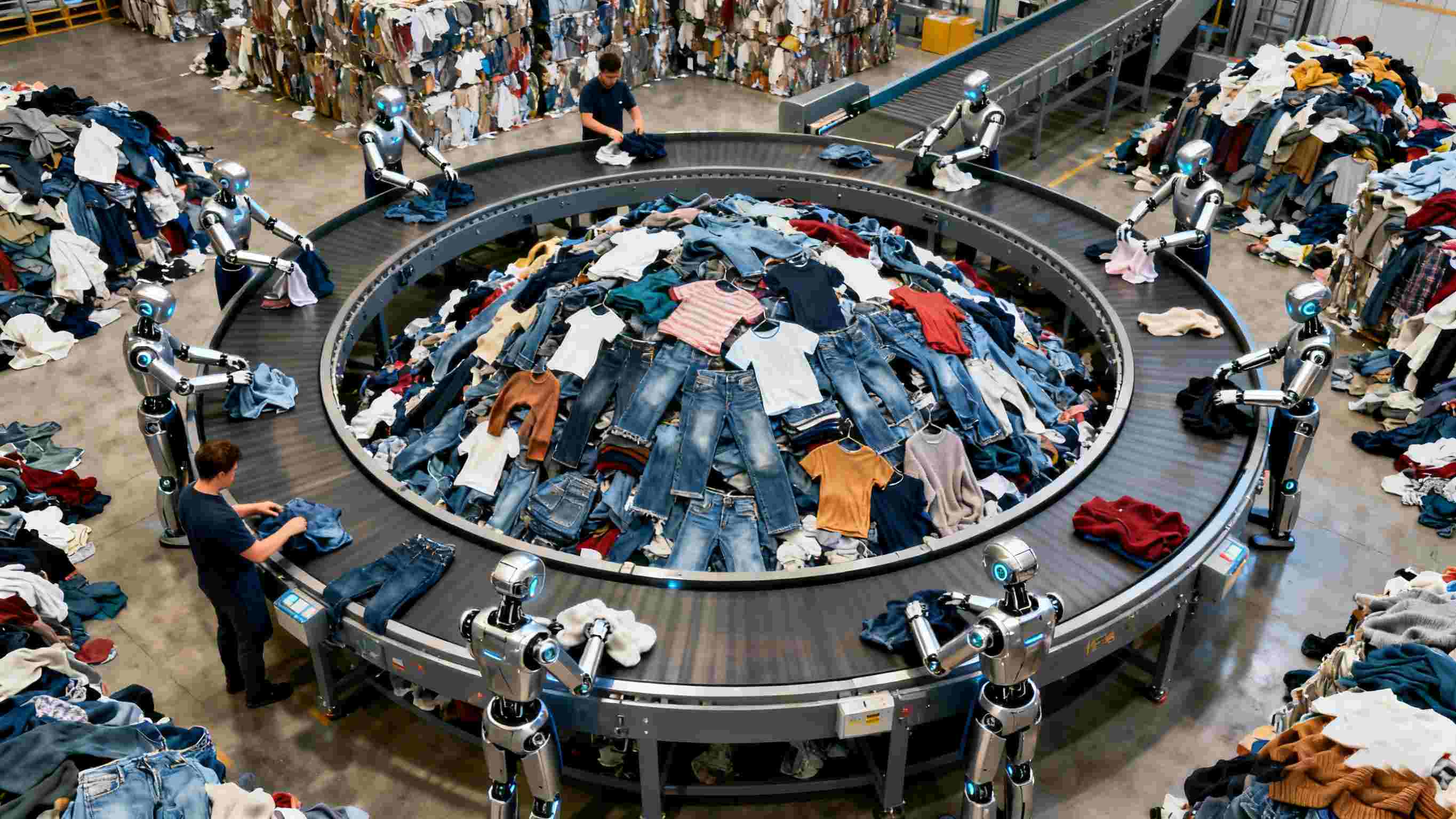
As the industry scales, sorting is evolving into four distinct automated stages:
●Stage 1: Automated Macro-Categorization (Whole Garment): Using intelligent lines to pre-screen garments by category (shirts, T-shirts, coats, etc.).
●Stage 2: Specialized "Work Island" Refinement: Establishing category-specific islands using a "Manual Experience + Embodied AI Robots" model to distinguish gender, color, and specific material grades.
●Stage 3: Automated High-Purity Extraction from "Dark Stock": Utilizing optical sorters to extract high-purity materials (e.g., >90% polyester) from difficult-to-process dark waste for downstream physical or chemical recycling.
●Stage 4: Automated Material & Color Sorting for Offcuts and Shredded Waste: Achieving simultaneous automated sorting of both material and color for factory scraps and shredded garments.
The implementation of these four major automation trends will completely eliminate the inefficiency and disorganization of traditional sorting processes. They will provide a stable supply of high-quality raw materials for “fiber-to-fiber” high-value closed-loop recycling, propelling the textile industry's green transformation into a new phase.
IV. Case Study
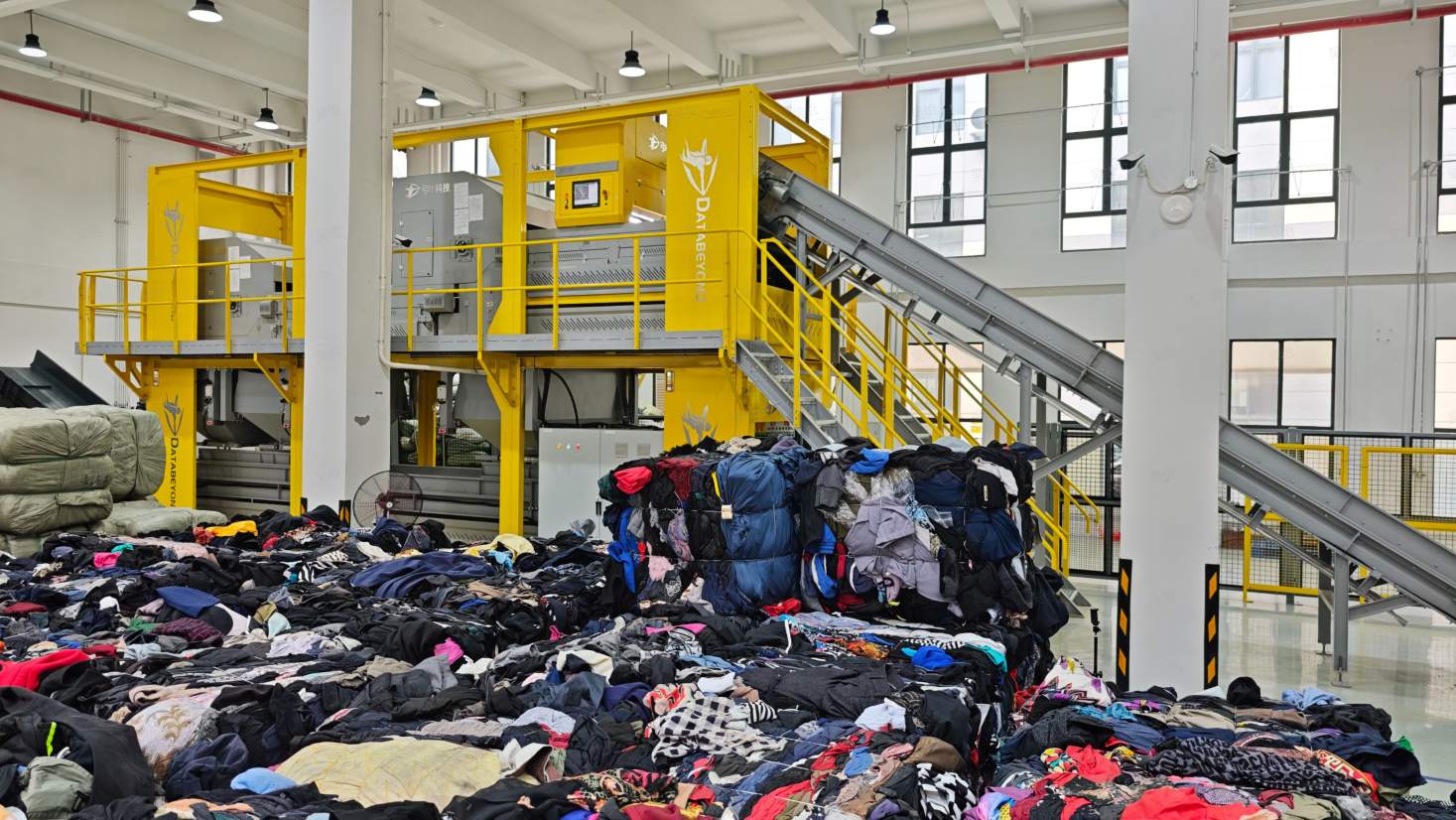
In Zhangjiagang, a fully automated textile sorting line powered by Databeyond processes approximately 2 tons per hour. A workshop that previously required over 30 workers now only needs 4, significantly increasing both efficiency and precision.
V. Weaving a Shared Future: Giving Every Piece of Old Clothing a Purpose
The “fiber-to-fiber” closed-loop system is a practical path requiring collaboration across the entire industry chain.
● Environmental Impact: Promoting the “fiber-to-fiber” regeneration of waste textiles significantly reduces environmental burdens. Recycling 1 kilogram of old textiles equates to reducing 3.6 kilograms of carbon dioxide emissions, conserving 6,000 liters of water, and lowering fertilizer and pesticide usage.
● Economic Dimension: High-value recycling of waste textiles is fostering a trillion-dollar green industry. It drives technological upgrades and equipment innovation across sorting, regeneration, and manufacturing, expanding into a complete industrial chain from collection networks to regenerated material applications.
● Social Dimension: This circular model is quietly reshaping public consumption habits. When every piece of old clothing can be reborn through technology, the notion that “everything can be recycled” is gradually becoming a social consensus, driving the formation of greener, circular lifestyles and value orientations.
Ensuring every piece of old clothing finds its place; ensuring every cycle sustains itself endlessly—this not only weaves a green textile system from fiber to fiber but also guides us toward a future of resource circulation and harmonious coexistence between humanity and nature.
 IPv6 network supported
Leave A Message
Scan to Wechat :

Scan to WhatsApp :